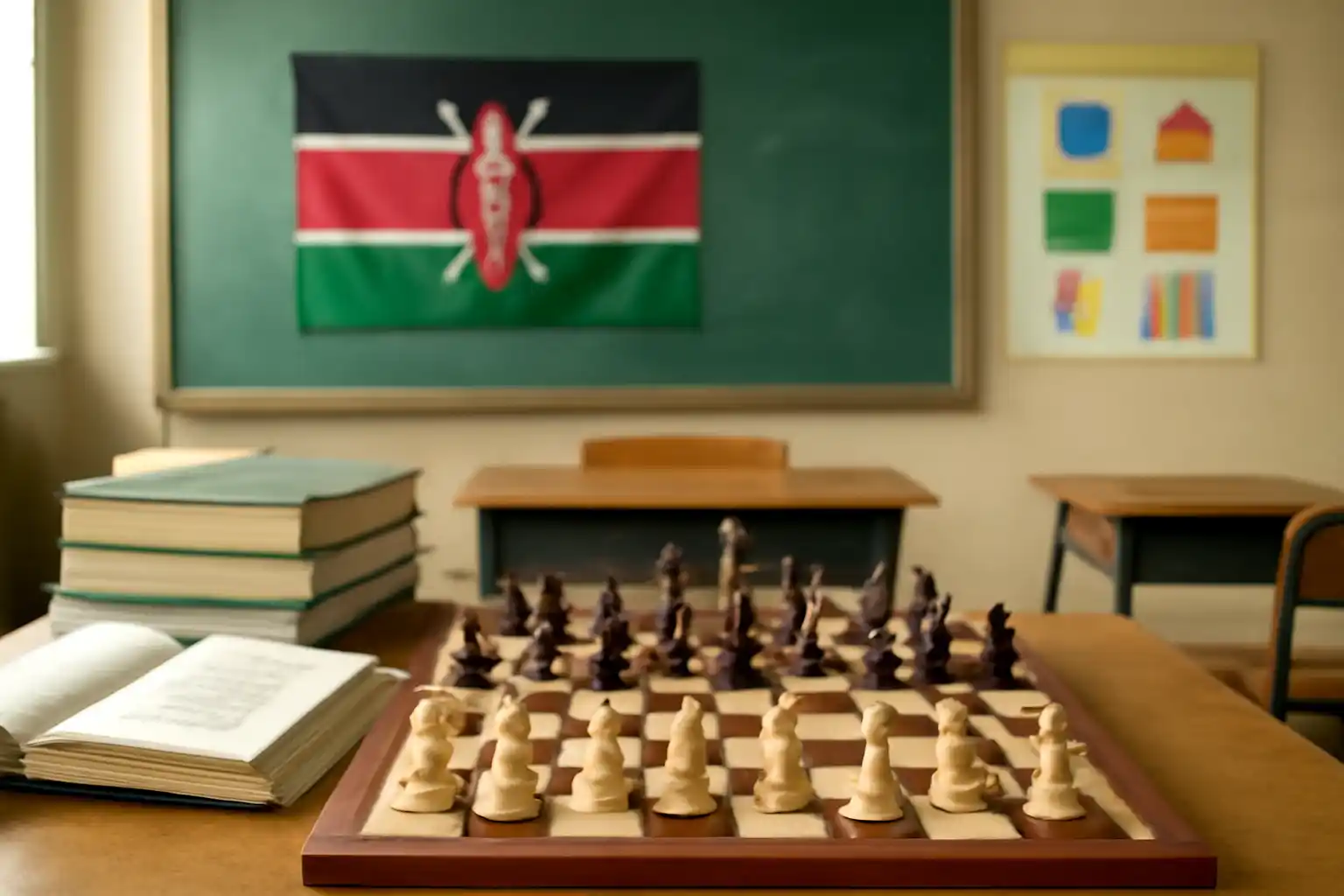
The Ministry of Education has formally added Chess in primary and junior schools to the 2026 Term Two sports calendar. The addendum directs all primary and junior schools to form teams and take part in Sub-County, County, Regional, and National championships, using standard rules and equipment recognized by FIDE and the Kenya Chess Federation (KCF).
Key Takeaways
- Chess in primary and junior schools is now an official discipline under Term Two Games.
- Schools must prepare teams across age categories (U10, U12, U13, U14) for boys and girls.
- Each team may register six players; four play per match and two are reserves.
- Regional and local education officers will integrate chess into planning, budgeting, and reporting.
Chess in primary and junior schools — what the circular requires
The circular instructs Regional, County, and Sub-County Directors of Education to notify schools and ensure chess is added to the Term Two schedule. Schools are expected to organize trials, select teams, and enter competitions at all levels. Standardized rules and approved equipment must be used to guarantee fair play and safety.
Competition levels and team composition
Schools must follow the specified age categories and team sizes below. A school may enter in any or all applicable categories.
- Primary School Teams: Under 10 Boys (6 players), Under 10 Girls (6 players), Under 12 Boys (6 players), Under 12 Girls (6 players).
- Junior School Teams: Under 13 Boys (6 players), Under 13 Girls (6 players), Under 14 Boys (6 players), Under 14 Girls (6 players).
Matches use four playing boards; two of the six registered players act as reserves. Schools should ensure students understand match rules and time controls used in school chess competitions.
Implementation and local responsibilities
RDEs, CDEs, and SCDEs are required to:
- Disseminate the circular to all schools in their area.
- Include chess in Sub-County and County sports planning and budgets for Term Two.
- Schedule competitions to align with the main Term Two Games calendar without causing conflict with other activities.
School leaders should add chess to their co-curricular timetables and allocate training time, equipment, and a supervising teacher or coach.
Reporting and monitoring
Officers at all administrative levels must monitor compliance and submit participation reports through established co-curricular reporting channels. This will help track entries, results, and any resource gaps that need support.
Benefits of adding chess to school activities
Chess supports the goals of Competency-Based Education (CBE) by strengthening critical thinking, concentration, planning, and decision-making. Key benefits include:
- Improved problem-solving and analytical skills.
- Enhanced patience, focus, and emotional control during competition.
- Opportunities for talent identification and progression into regional and national pathways.
How schools should prepare
Practical steps for schools:
- Set up a chess club or include chess practice in existing co-curricular programs.
- Identify and train interested learners across the four age categories.
- Source reliable chess sets, clocks, and access to rules from KCF or FIDE guidance.
- Use internal mini-tournaments to select teams and practice match conditions.
Resources and further support
Teachers and school coordinators can use curriculum and assessment resources to support chess programs and related cognitive skills. Useful internal resources include curriculum designs and lesson plans for CBC and junior secondary levels. For example:
- CBC curriculum designs for integrating thinking skills into lessons.
- CBC lesson plans to build structured practice sessions that reinforce concentration and strategy.
- JSS teaching notes for teacher guidance on coaching and monitoring learner progress.
Schools preparing teams should also consider peer mentoring, local chess clubs, and partnerships with the Kenya Chess Federation for formal coaching and equipment advice.
Next steps for heads and sports coordinators
Heads of institutions and sports coordinators should immediately:
- Announce trials and form training schedules for Term Two.
- Record and register teams according to the age categories and team composition rules.
- Include chess expenses in the Term Two sports budget and request support where needed.
Implementing chess in schools offers a low-cost, high-impact way to promote cognitive development and competitive opportunity. With clear planning and support, schools can introduce successful chess programs that benefit learners academically and socially.