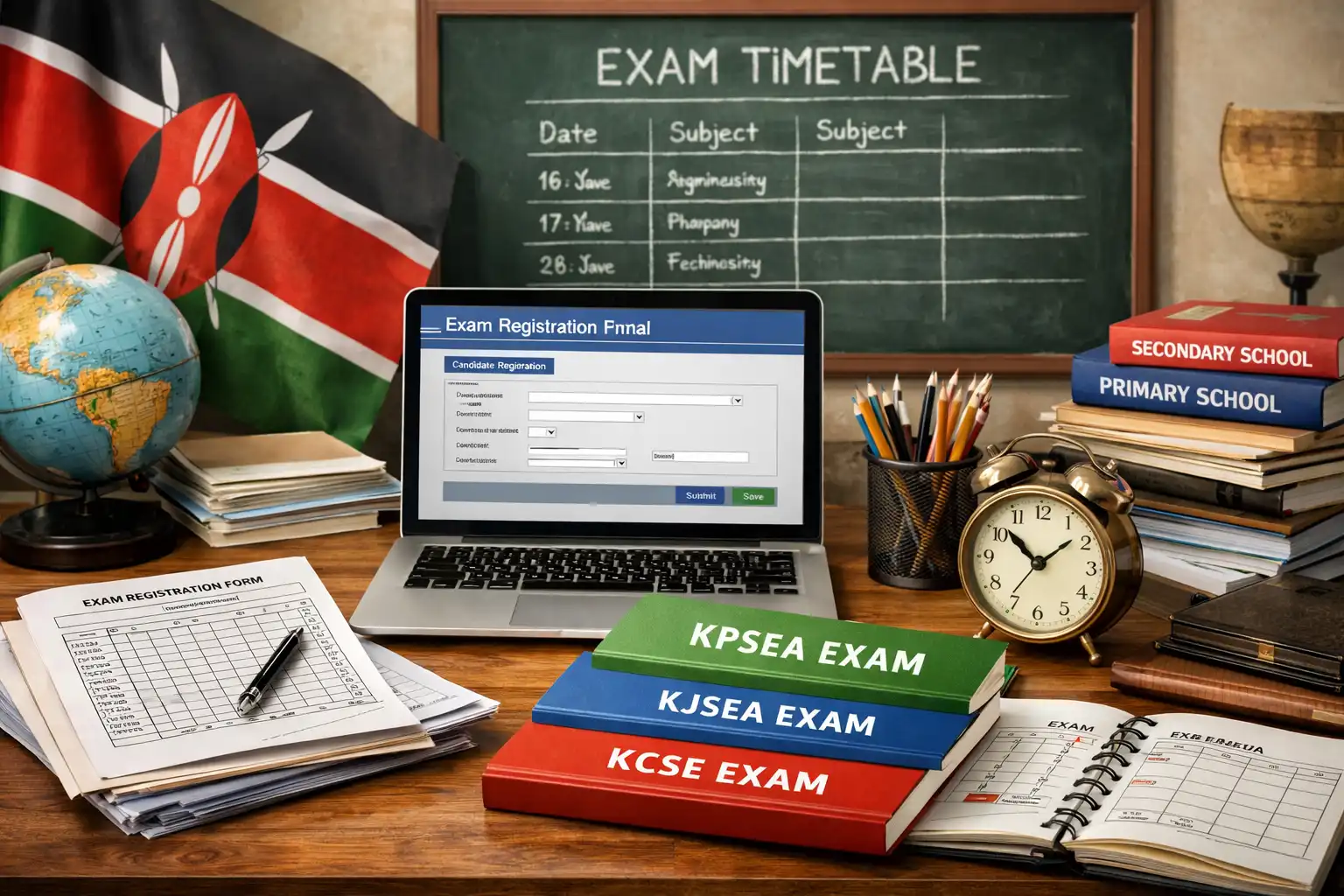
The Kenya National Examinations Council has published the KNEC registration dates for national assessments in 2026. Schools should register eligible learners for KPSEA (Grade 6), KJSEA (Grade 9) and KCSE (Form 4) within the specified windows and follow the council’s data and eligibility rules to avoid penalties.
Key Takeaways
- Registration windows: KPSEA — 16 Feb to 16 Mar 2026; KJSEA — 2 Mar to 31 Mar 2026; KCSE — 16 Feb to 31 Mar 2026.
- Eligibility rules: Only learners who meet the criteria (e.g., existing in Grade 9 database for KJSEA) may be registered.
- Registration platform: Schools must use the KNEC CBA portal to enter assessment numbers for KPSEA and KJSEA.
- Verification: Parents can confirm registration via SMS to the designated KNEC short code after schools complete registration.
KNEC registration dates — timelines you must know
KNEC registration dates for the 2026 cycle are set to ensure smooth preparation and accurate candidate records. Schools should diarise the following windows and start preparations early:
- KPSEA (Grade 6): 16 February to 16 March 2026
- KJSEA (Grade 9): 2 March to 31 March 2026
- KCSE (Form 4): 16 February to 31 March 2026
Who is eligible for registration?
Only learners who meet KNEC eligibility rules should be presented for the assessments. Key eligibility points include:
- KPSEA: Grade 6 learners with valid assessment numbers.
- KJSEA: Learners must exist in the Grade 9 database and have a KPSEA performance report plus School Based Assessment (SBA) scores for Grades 7 and 8.
- KCSE: Form 4 students who meet school and national requirements for the KCSE exam.
How schools should register candidates
Schools are responsible for accurate and timely registration. Follow these steps:
- Prepare learners’ records and confirm assessment or index numbers before the portal opens.
- For KPSEA and KJSEA, log into the KNEC CBA portal and enter assessment numbers and required data.
- Complete KCSE registration within the KCSE window, ensuring all student details match official documents.
- Submit any transfer requests for Grade 6 and Grade 9 learners online before the portal closes to avoid double registration.
Data accuracy, required details and penalties
Heads of institutions must verify learner information carefully. Required data points include:
- Correct spelling and order of names as on the birth certificate
- Gender and year of birth
- Citizenship
- Religious education option (e.g., CRE, IRE, HRE)
Registration of ghost candidates or inaccurate data is an assessment malpractice. Sanctions may include de-registration of a school as a KNEC assessment centre. Schools should run internal checks before submitting records.
How parents and guardians can confirm registration
After schools finish registration, parents may confirm that a learner is registered by sending an SMS using the correct format to the verification short code. The message must start with the exam or assessment type followed immediately by the index or assessment number. Example formats:
- KCSE: KCSE123506013
- KPSEA or KJSEA: start with the assessment type followed by the assessment number
A confirmation reply will indicate whether the supplied index or assessment number is registered for that year.
Resources and next steps for schools and students
Schools should keep records organised and prepare SBAs and KPSEA performance reports early. Teachers and learners looking for past papers and revision material for national exams can use targeted resources such as the KPSEA and primary exam practice materials and comprehensive KCSE past papers and revision exams. Grade 9 and CBC-related resources are also available, for example the CBC curriculum designs and lesson guides to support school-based assessment preparation.
Final reminders for smooth registration
- Start preparation early and confirm each learner’s details against official documents.
- Submit transfers online before the portal closes to avoid complications.
- Keep SBA records and KPSEA reports ready for KJSEA candidate registration.
- Inform parents about the SMS verification format so they can confirm registration promptly.
Following the KNEC registration dates and the council’s guidance will reduce errors and help ensure learners are correctly entered for the 2026 national assessments.