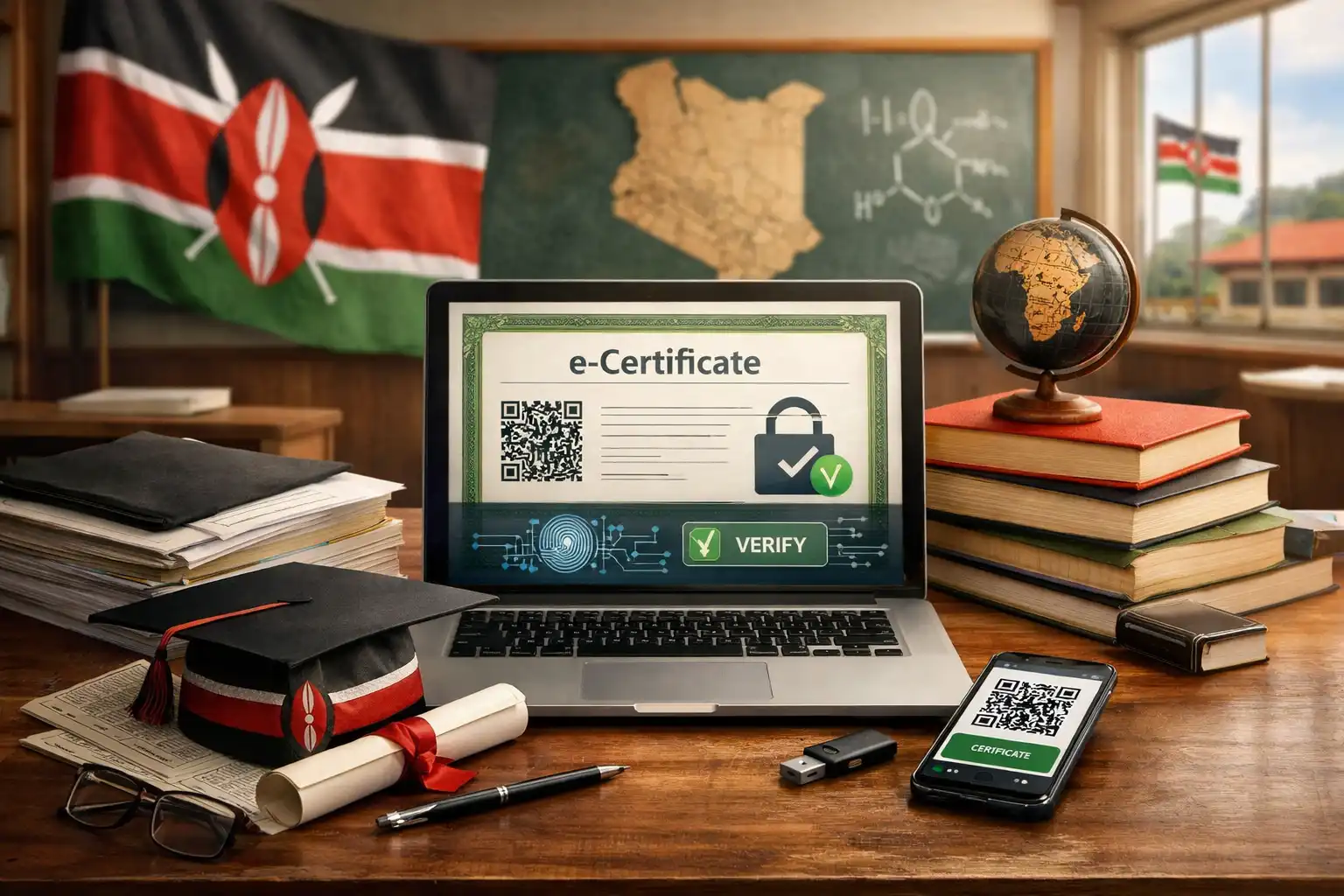
The Kenya National Examinations Council is rolling out KNEC e-certificates and an online certificate verification system for all certificates issued from 2023, aiming to curb forgery and make credential checks instant and reliable.
Key Takeaways
- KNEC e-certificates will apply to certificates issued from 2023 and will be piloted by the end of February.
- The platform enables instant online verification of academic credentials, reducing opportunities for forged certificates.
- Registration windows for 2026 exams: KPSEA (Feb 16–Mar 16), KCSE and KPSEA (Feb 16–Mar 31), KJSEA (Mar 2–Mar 31).
- Parents will be able to confirm learner registration details during the April school holidays; schools risk disciplinary action for registration errors.
What the KNEC e-certificates mean
The new KNEC e-certificates are digital versions of national exam certificates that include secure verification features. The system is designed to make it easy for employers, institutions, and individuals to confirm the authenticity of academic documents online. Implementing e-certificates for documents issued from 2023 will make it harder for fraudsters to use forged papers.
How the electronic verification will work
KNEC will host a secure digital platform that stores certificate records and provides an instant verification service. When an institution or employer needs to confirm a certificate, they will use the platform to check the document’s validity against KNEC records. The pilot phase is scheduled to start at the end of February, after which the system will be refined before wider rollout.
Important 2026 exam registration dates and changes
KNEC has announced the registration windows for key national assessments in 2026. Schools must ensure accurate data entry to avoid locking out candidates or causing placement problems later.
- KPSEA registration: February 16 to March 16.
- KCSE registration: February 16 to March 31.
- KJSEA registration: March 2 to March 31.
The council has also introduced systems to eliminate registration errors and will allow parents to confirm registration details during the April school holidays.
What schools and parents should do now
Schools should double-check all learner details during registration: names, dates of birth, gender, and index numbers. Accurate data entry reduces the risk of placement delays and disciplinary notices. Heads of institutions who submit incorrect registration data risk action by the Teachers Service Commission.
Parents should use the upcoming parent verification platform in April to confirm their child’s registration and to flag mistakes early so corrections can be made before assessments and placement processes.
Implications for learners and employers
For learners, KNEC e-certificates will speed up verification during job or higher-education applications and reduce the uncertainty caused by forged documents. Employers and tertiary institutions will find it easier to validate qualifications, reducing the administrative burden of manual checks.
As the Competency Based Education cohort transitions to senior school, institutions should familiarise themselves with both the new certificate format and the registration verification steps to avoid delays in admissions and placements.
How this affects Grade 10 and CBC learners
The change coincides with the ongoing transition under the Competency Based Education (CBE) and the Competency-Based Curriculum (CBC). Schools preparing Grade 10 learners should review placement requirements and curriculum designs to ensure smooth progression.
Find Grade 10 curriculum designs and senior-school resources here:
- Grade 10 curriculum designs and resources
- Senior school curriculum designs
- CBC curriculum designs and teacher resources
Practical tips for verification and record-keeping
- Keep digital and printed copies of registration confirmations issued by the school.
- Parents should verify registration details during the April verification window and keep screenshots or printed evidence.
- Employers and institutions should use the KNEC online verification tool once available to confirm certificates from 2023 onwards.
- Schools should maintain accurate admission and registration logs to support any future verification queries.
Further exam preparation resources
Students preparing for national exams can access practice materials and past papers relevant to their level. For KCSE candidates, topical revision and past papers can help with preparation, while primary and junior learners can find CBC-aligned exams and teaching notes.
- KCSE (KSCE) revision exams and past papers
- KCPE past papers and practice exams
- CBC practice exams and teaching notes for primary grades
Adopting KNEC e-certificates is a significant step toward securing academic credentials and streamlining verification. Schools, parents, learners, and employers should prepare for the new system by confirming registration details, keeping accurate records, and using the verification service once it is live.