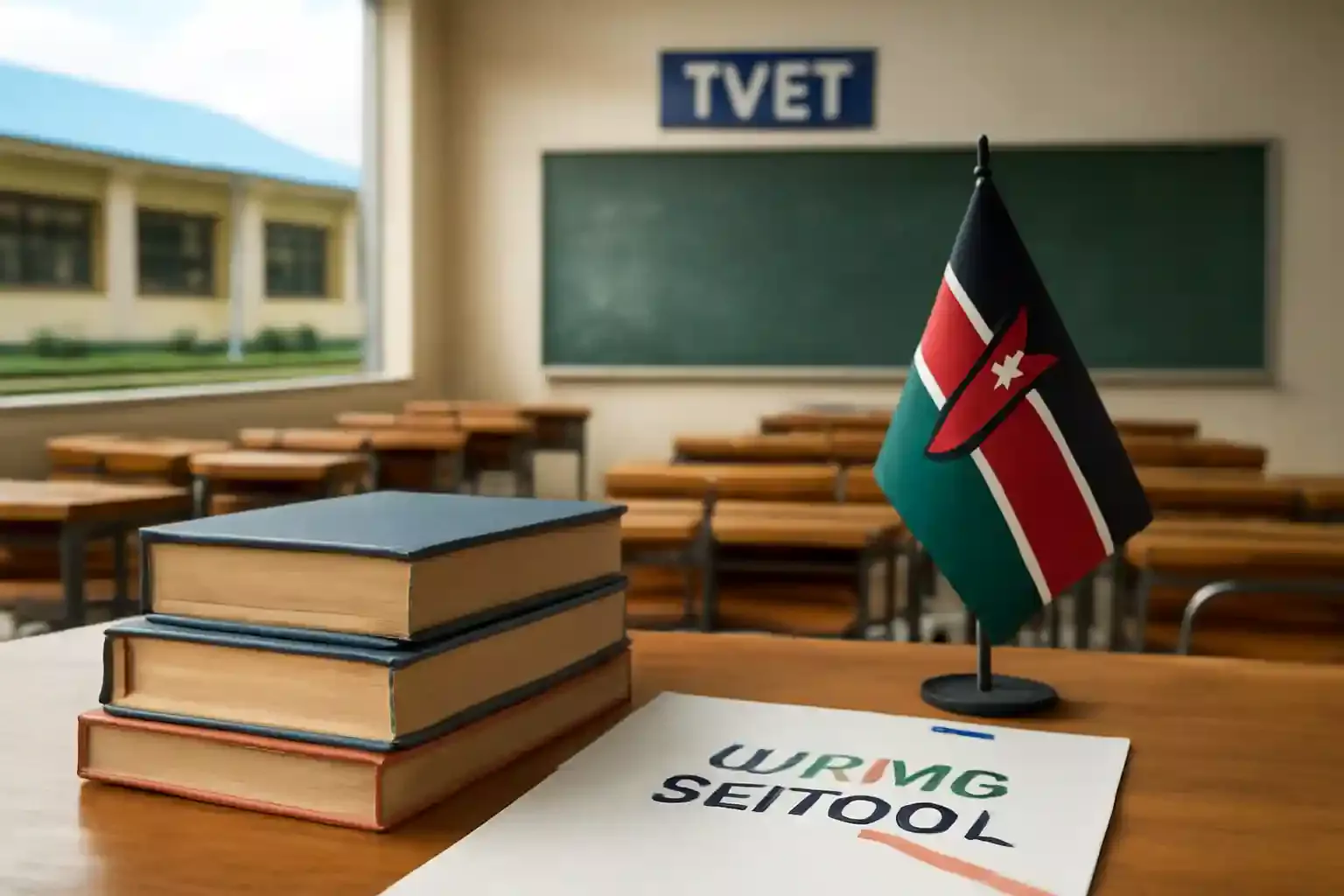
Kenya faces a fast-growing need for qualified CBE technical teachers as more than one million learners move into senior school under the Competency-Based Education (CBE) system. The Teachers Service Commission (TSC) has opened recruitment channels to Technical and Vocational Education and Training (TVET) trainers and adjusted minimum entry requirements to speed placements into technical and practical subjects.
Key Takeaways
- TSC now allows single-subject specialization for technical teachers, lowering some barriers for TVET graduates.
- Circular No. 9/2026 sets clear subject-specific minimum KCSE grades for technical subjects.
- Major shortages exist in STEM trades, modern languages, arts, sports science, and special needs education.
- Successful integration of TVET trainers requires pedagogical upskilling, funding for workshops, and fair career terms.
Why the urgent need for CBE technical teachers?
The CBE senior school model (Grades 10–12) places a heavy emphasis on practical and technical pathways. That shift creates immediate demand for instructors in subjects such as building construction, electricity, metalwork, aviation, marine and fisheries, media technology, and sports science. Many qualified technical experts prefer private-sector roles, leaving public secondary schools understaffed.
Major shortage areas across CBE pathways
- STEM and technical trades: electricity, building & construction, power mechanics, woodwork, metalwork, aviation, marine and fisheries.
- Digital and media technology: advanced computer studies, networking, digital production and media technology.
- Social sciences and languages: indigenous language specialists, Kenyan Sign Language (KSL), Arabic, Mandarin and other modern languages.
- Arts and sports science: music & dance, theatre & film, fine arts, sports medicine and coaching science.
The role of Circular No. 9/2026 in recruiting CBE technical teachers
Circular No. 9/2026 provides regulatory clarity by mapping technical subjects to acceptable KCSE alternatives and setting a minimum grade requirement. The directive permits single-subject teaching specialization — candidates need a minimum mean grade of C plain and at least C+ in the specific technical subject. This change unlocks recruitment of diploma, HND and degree holders from TVET institutions into public secondary education.
Subject-specific minimums (summary)
- Aviation: C+ in Mathematics, English, Physics, Chemistry, Geography or Computer Studies.
- Building Construction: C+ in Mathematics (A/B), Physics, English/Kiswahili, Chemistry, Biology/Geography, or related technical subjects.
- Electricity: C+ in Physics and Mathematics (critical), or related technical subjects.
- Media Technology: C+ in English/Kiswahili and Mathematics, plus a science subject.
- Marine & Fisheries: C+ in Biology, Chemistry or Physical Sciences and Mathematics or Geography or Agriculture.
Policy note: attainment of C+ in any one of the listed alternative subjects is sufficient where alternatives are provided.
How TVET trainers will be integrated into senior schools
Integration relies on three pillars: staffing, infrastructure, and teacher development. Many TVET institutions now have modern workshops, CNC equipment, automotive labs and ICT resources. Recruiting their trainers fills gaps fast, but schools must be ready to host practical instruction.
Teachers and schools can access relevant exam resources and practical assessments to align teaching with CBE expectations. For example, TVET instructors and trainees can use the TVET exam resources and related materials to prepare for classroom assessments.
Practical supports and resources
- Align lesson plans and schemes with senior-school designs: see CBE curriculum designs and senior school curriculum designs.
- Use ready-made lesson plans for classroom delivery: CBE lesson plans help fast-track classroom readiness.
- Encourage TVET graduates to complete short pedagogical courses and TPAD-aligned training for classroom management and assessment.
Challenges and recommended solutions
- Pedagogical upskilling: Fast-track teacher training modules in educational psychology, classroom management and assessment for TVET trainers.
- Remuneration and career parity: Harmonize salary scales and promotion pathways to retain technical teachers in public service.
- Workshop readiness: Continuous capital investment to equip secondary-school workshops to industry standards.
- Placement planning: Match instructors to schools with the right equipment and student demand to maximize impact.
What TVET graduates and prospective teachers should do
If you hold a TVET diploma, HND or technical degree and want to teach under CBE, consider the following steps:
- Confirm you meet subject-specific minimums in Circular No. 9/2026 and gather academic transcripts.
- Enroll in short pedagogy courses or diploma-in-education modules to strengthen classroom skills; refer to available past papers and guides such as Diploma in Education past papers.
- Prepare teaching resources aligned to CBE senior-school pathways using curriculum and lesson-plan resources listed above.
Vision: stronger technical education for the economy
Opening secondary classrooms to certified TVET trainers is a practical step toward closing the teacher gap in technical disciplines. With clear standards, targeted training, and consistent investment in school workshops, Kenya can equip the current cohort of senior-school learners with the practical skills needed for industry and global competitiveness.