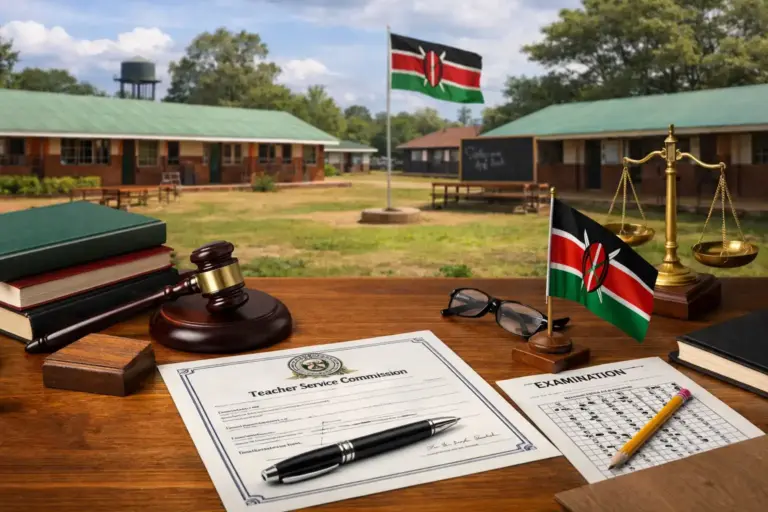
If you are preparing for TSC JSS interviews and document verification, this guide explains what to expect, how marks are awarded, which documents to bring, and the steps after the interview. It focuses on the practical actions that increase your chances of confirmation to permanent and pensionable terms.
Key Takeaways
- The process prioritises serving JSS interns who can prove continuous sub-county service; 70 of 100 marks are tied to internship service.
- Bring original documents and clear photocopies for verification — missing or forged papers lead to disqualification.
- Understand the scoring, preferences and tie-breakers before the interview to know where you stand.
- Start assembling post-selection files early (medical report Form GP 69, PINs, bank details) to avoid delays.
TSC JSS interviews — what to expect
The TSC recruitment for Junior Secondary School (JSS) teachers moves from online shortlisting to in-person sub-county interviews and document verification. Most advertised vacancies aim to convert serving interns to permanent and pensionable status rather than hire large numbers of new teachers. If you applied through the teachersonline.go.ke portal, expect an SMS with your interview date at least seven days before the event.
How marks are awarded
The score sheet is decisive. Section D awards 70 marks for continuous internship service in the sub-county where you apply. Interns with 12 months or more get the full 70; those under 12 months receive 50; non-interns score zero here. The remaining 30 marks cover:
- Academic qualification (up to 3 marks)
- Age (up to 7 marks)
- Length of stay since qualifying (up to 20 marks)
Because of this weighting, verified interns will almost always outrank non-interns for the same slot. Non-interns can compete for slots with no interns or vacancies created by attrition.
Document verification checklist
Verification is a common point of failure. Bring originals and clear photocopies of all items below. The Sub-County Director will certify photocopies against originals before the interview.
- National ID
- Teacher registration certificate (unregistered applicants are not considered)
- Degree or diploma certificate and official transcripts (provisional transcripts are rejected)
- KCSE and KCPE certificates (include every attempt; cancelled exams require a letter and certified KNEC printout)
- Primary and secondary school leaving certificates and testimonials
- NCPWD card (if applicable)
- Name-variance affidavit (Cap 15) if names differ across documents
- KNEC certification letter (where applicable)
Keep internship renewal contracts and payslips as primary evidence of continuous service. If you moved between sub-counties, confirm how that affects your claim with your Sub-County Director before the interview.
Interview panel and process
Each panel has three members: the TSC Sub-County Director (chair), the Sub-County HR Officer (secretary) and the Curriculum Support Officer. Every member scores candidates separately; the panel average is used. Attend in person. Applicants with hearing or speech disabilities may bring a sign language interpreter.
Minimum qualifications and training requirements
Applicants must meet entry standards. Requirements include a KCSE mean grade of C+, and a C+ in both teaching subjects or equivalent diploma qualifications. Diploma routes require at least a C- in English and a minimum grade in mathematics. Training must include at least eight course units per teaching subject, teaching methods in both subjects, and three months of teaching practice. The new CBE learning areas (integrated science, pre-technical studies, creative arts, sports and social studies) are accepted.
Preferences, disability slots and tie-breakers
After scoring, preference order is applied: applicants not previously on permanent and pensionable terms, then sub-county applicants, then county applicants — each ranked by merit. At least 5% of slots are reserved for applicants with disabilities; they must present their NCPWD card. Where ties occur, tie-breakers are applied in this order:
- Length of stay since graduation
- Quality of academic certificates
- Quality of professional certificates
- Subject grades (if needed)
After the interview — offers and required post-selection documents
The Sub-County Director sends merit lists to the County Director for verification. Only successful candidates receive Application for Employment forms. If offered, prepare a certified submission file for TSC headquarters that includes:
- Certified copies of ID, registration certificate, academic and professional documents
- Bank card or bank plate, KRA PIN, SHIF number printout, NSSF card
- Next of Kin form and two passport photos
- Original medical report on Form GP 69
- Pay point particulars form
The medical report can take time. Start arranging it early.
If you disagree with an outcome
TSC provides a complaints and appeals process with strict timelines. Send a written complaint to the County Director and email dirstaffing@tsc.go.ke within seven days of selection. The County Director has seven days to respond. If unresolved, appeal in writing to the Director Staffing within seven days; the Appeals Committee acts within 14 days.
Practical preparation checklist
- Locate and photocopy original internship contracts and payslips.
- Get a name-variance affidavit if documents show different names.
- Confirm your sub-county service record with the Sub-County Director.
- Prepare originals and certified copies listed in the verification checklist.
- Review teaching content and sample questions; use available resources like JSS teaching notes and CBC curriculum designs.
- If you trained via diploma, revise with Diploma in Education past papers.
This recruitment round is a defining moment for many interns. The process strongly favors those who have served continuously and can show proof. Gather your documents, confirm your service records, and prepare for the panel well in advance.