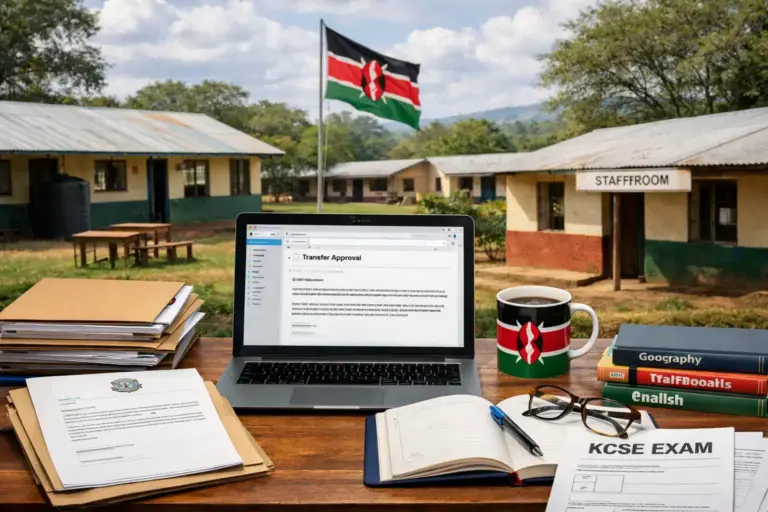
On 23 November 2026 the Teachers Service Commission launched an intensive Media Technology teacher training programme for senior school teachers of Media, Film and Theatre. The course combines an 18-day residential phase, followed by online modules and a four-week school project to prepare teachers to deliver the Competency-Based Education (CBE) creative arts pathway.
Key Takeaways
- The programme targets 1,600 teachers and started with cohort one (23 Nov–12 Dec 2026).
- Training blends hands-on studio work, theory and assessment aligned to CBE.
- Participants will complete two weeks of online modules and a four-week school project after the residential phase.
- Main challenges are equipment shortages and the need for ongoing mentorship to ensure sustainability.
About the Media Technology teacher training
The Media Technology teacher training aims to move creative arts instruction from textbook-led lessons to practical, learner-centred teaching. Teachers gain technical skills with cameras, lighting, sound and editing software while learning how to design assessments and classroom activities that match CBE principles.
Training design and delivery
The programme uses a three-part design:
- Residential practical phase (18 days): Intensive hands-on sessions at specialist hubs where teachers use professional equipment and work with Kenya Institute of Mass Communication (KIMC) facilitators.
- Online follow-up (two weeks): Learning Management System modules to reinforce concepts, assuming baseline digital literacy.
- School project (four weeks): Teachers implement a classroom project that adapts studio techniques to local resources and timetables.
Training locations and cohort plan
Cohort one ran simultaneously at five hubs to concentrate resources and build peer networks: KIMC (Nairobi), Tseikuru National Polytechnic (Kitui), Scotts International University (Machakos), Kabarak University (Nakuru) and Michuki National Polytechnic (Murang’a). Cohort two is scheduled for April 2027. Running multiple hubs at once reduces travel distance and helps form cross-county communities of practice.
Who was selected to attend
Participants were nominated through the official TSC process and fall into three categories:
- TSC-registered teachers and teacher college tutors with recognised teaching qualifications (including Special Needs Education).
- Teachers or tutors holding technical qualifications in related fields (Mass Communication, Film and Theatre, Sound Production, Photography, editing, animation).
- Teachers who lead co-curricular media, drama or journalism clubs seeking formal curriculum alignment for their experience.
What teachers gain
Teachers exit the programme with a combination of technical confidence and pedagogy. Key gains include:
- Practical competence with production equipment and workflows.
- Skills to design learner-centred, project-based lessons and fair assessments under CBE.
- Strategies to use locally available resources when full studios are not possible.
- Membership in a growing community of creative arts educators for peer support.
Equipment, challenges and sustainability
Training alone will not guarantee better classroom delivery. The main constraints are limited school equipment—cameras, computers with editing software, sound gear and performance spaces. To sustain impact, schools and county education offices must support returning teachers with release time, classroom cover and targeted procurement.
Long-term success also depends on mentorship, refresher courses and peer networks hosted on the LMS. The design’s online and project elements help, but dedicated follow-up and local coordination are essential to prevent skills from fading.
How schools and managers can support trained teachers
- Plan cover and timetabling so trained teachers can apply school projects without disrupting core lessons.
- Prioritise low-cost equipment purchases (tripods, basic microphones, smartphones for filming) to make practical work possible.
- Use teacher communities of practice to share lesson plans and troubleshooting tips.
- Advocate with County Directors for targeted resources and ongoing mentorship programmes.
Further resources for CBE and senior school curriculum
Teachers and school leaders preparing to deliver Media Technology and other CBE subjects may find the following curriculum and resource pages useful:
- Senior school curriculum designs — guidance on pathway structure and subject outcomes.
- CBC teaching notes — practical lesson guidance aligned to learner-centred methods.
- Free CBC curriculum designs — sample designs that can inform school projects and assessments.
Conclusion
The TSC’s retooling initiative marks a practical shift toward equipping teachers to deliver the CBE Sports and Creative Arts pathway. Media Technology teacher training gives educators hands-on experience, pedagogical strategies and follow-up support that together increase the chance that film, media and theatre will be taught effectively in senior schools. The remaining tasks are ensuring equipment access and ongoing professional support so classroom practice reflects the new skills teachers now hold.