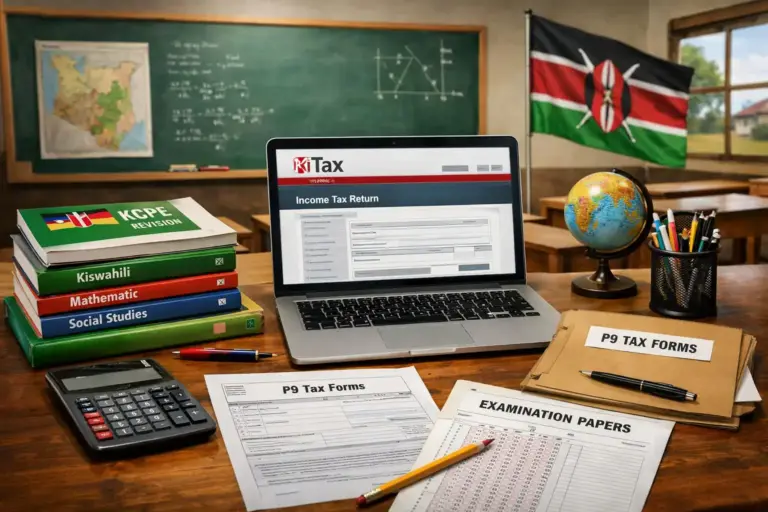
The move to the Competency Based Curriculum (CBC) has removed national creative writing tests from the primary-level KPSEA assessment, shifting Insha and Composition marking to junior and senior school levels. This change affects who marks exam scripts, how learners are assessed, and the seasonal income many primary teachers relied on.
Key Takeaways
- KPSEA creative writing is no longer tested at primary level; KPSEA uses OMR multiple-choice papers.
- Primary teachers have lost marking roles and seasonal income previously tied to Kiswahili Insha and English Composition.
- Creative writing assessment now appears at junior (KJSEA) and senior (KCBE) levels, increasing demand for junior school markers.
- KNEC cites speed, cost and consistency for OMR marking; teachers argue this conflicts with CBC goals for communication skills.
- Teachers and parents are calling for a review so primary assessments reflect the CBC’s focus on creativity and expression.
KPSEA creative writing: Why it disappeared
Under the old 8-4-4 system, KCPE included essay papers that required trained human examiners. With CBC, the Kenya Primary School Education Assessment (KPSEA) focuses on five papers — Mathematics, English, Kiswahili, Integrated Science, and Creative Arts & Social Studies — many delivered as multiple choice and marked by Optical Mark Recognition (OMR) machines. The result: no national Insha or Composition paper at primary level.
Impact on primary school teachers
For years, marking Insha and Composition provided predictable November income for many primary teachers. KNEC paid examiners per script, so teachers who marked thousands of scripts could earn substantial additional pay. The OMR-only KPSEA format eliminates the need for human essay markers, removing both earnings and the professional exposure that comes from national marking experience.
Where creative writing is now tested
Creative writing has not been abolished — it has been moved. KNEC now tests composition and Insha at the junior school level through the Kenya Junior School Education Assessment (KJSEA) and again at senior level in the Kenya Certificate of Basic Education (KCBE). That shift means junior school teachers are now the primary pool of examiners for written responses and open-ended questions.
KJSEA marking and examiner pay
The 2026 KJSEA marking exercise required large teams of trained human markers because many papers include open-ended questions and creative writing tasks. Examiners are paid per script (for example, Ksh 35 per script) plus fixed allowances. Marking centres and training sessions (often residential) are organised by KNEC; markers must meet training and attendance requirements before they can start earning.
Why KNEC prefers OMR for KPSEA
KNEC argues that OMR marking is faster, more consistent and easier to scale for huge cohorts. Machine marking reduces logistical burdens like recruiting and training thousands of essay markers and lowers the risk of subjective scoring. Critics counter that multiple-choice formats cannot measure learners’ ability to organise ideas, express creativity, or write coherently — skills the CBC emphasises.
Calls to restore primary-level writing assessment
Many teachers, parents and education stakeholders want KPSEA to test creative writing because it aligns with CBC objectives of communication and creativity. They argue the absence of a national writing test at primary level risks deprioritising writing in classrooms where teaching often follows what is examined. Any policy change would have to balance cost, speed and marking reliability against the pedagogical value of assessing writing.
Practical advice for teachers and parents
- Primary teachers: Keep teaching composition and Insha as required by the curriculum; consider marking opportunities at junior level and short courses to qualify for KJSEA marking panels.
- Junior school teachers: Prepare for increased demand for trained markers and consider attending KNEC residential training when invited.
- Parents and school leaders: Support classroom writing practice to ensure learners remain prepared for KJSEA and later assessments.
Resources for teachers and students
Teachers and learners can use CBC-aligned practice materials and curriculum guides to maintain strong writing skills despite assessment changes. Relevant resources include sample CBC exams and curriculum designs to guide classroom work. Explore free CBC practice materials such as free CBC exams for practice, and consult the CBC curriculum designs for what the syllabus expects at each level. Those preparing for primary transition may also find past primary exam papers useful; see KCPE past papers and practice to compare how creative writing used to be assessed.
The shift in marking roles is one of the most visible effects of the CBC’s rollout: it changed not only what learners face in tests, but who benefits from national assessment work. Policymakers, teachers and parents must now decide whether primary assessment design should be revisited so it better reflects the CBC’s emphasis on communication and creativity.