The Teachers Service Commission (TSC) requires teachers to dress in a way that supports a professional learning environment. The TSC dress code expects modest, neat and work-appropriate clothing that reinforces teacher authority, protects boundaries with learners and reflects respect for the school community.
Key Takeaways
- TSC dress code aims for modest, professional and non-distracting attire.
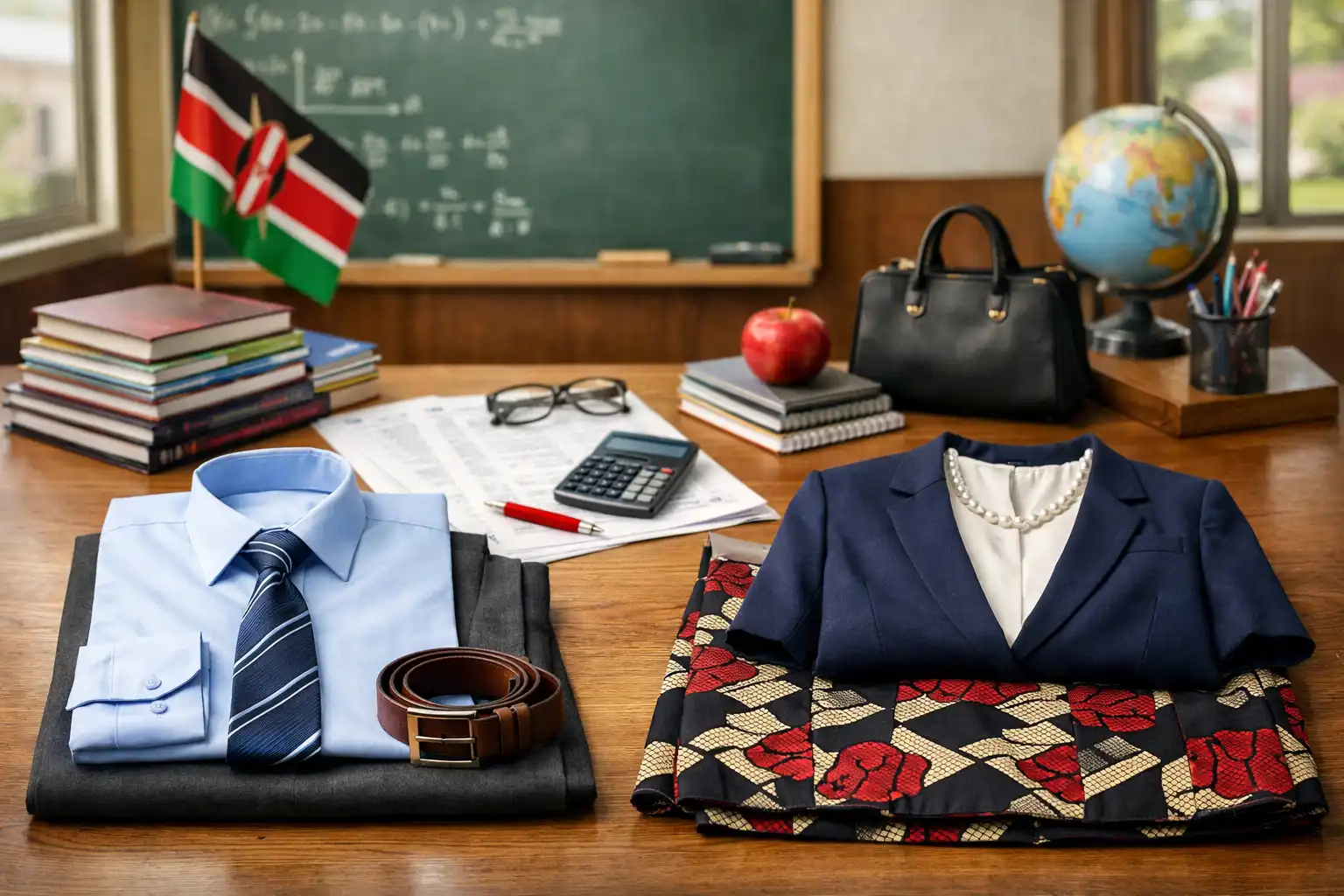
- Male teachers should wear collared shirts, formal trousers and closed shoes.
- Female teachers should choose modest tops, knee-length skirts or formal trousers and sensible footwear.
- Grooming, minimal jewelry and avoidance of political or flashy clothing are required.
- Following the code preserves respect, sets a role model example and keeps focus on learning.
Why professional attire matters
Teachers are public-facing professionals who work with children and families every day. Wearing professional clothing helps create a calm, focused classroom and supports the teacher’s role as a trusted adult. The TSC dress code encourages staff to choose clothing that keeps attention on teaching and learning rather than on appearance.
TSC dress code for male teachers
Male teachers are expected to present a formal or smart-casual look. Key points include:
- Shirts: Collared, buttoned and well-ironed shirts. T-shirts (round neck), jerseys or shirts with loud or political slogans are strictly forbidden.
- Trousers: Formal slacks or smart-casual trousers. Jeans, torn fabric, sagging or very tight trousers are prohibited.
- Footwear: Closed, formal and polished shoes in neutral colours (black or brown). Slippers, flip-flops or sports trainers are not allowed unless there is a medical reason with proof.
- Grooming and accessories: Keep hair neat and trimmed. Avoid visible jewelry, caps or hats in class.
These rules help male teachers maintain a professional image and provide clear boundaries with students.
TSC dress code for female teachers
Female teachers must choose modest, professional clothing that supports classroom authority and does not distract learners. The main guidelines include:
- Blouses and tops: Modest necklines and sleeves are preferred. Avoid sheer or excessively tight tops.
- Skirts and dresses: Knee-length or longer. Ensure slits are modest and do not draw attention.
- Trousers: Formal or smart-casual trousers are appropriate. Leggings or jeggings are discouraged unless worn with a suitable top that provides full coverage.
- Footwear: Closed shoes or smart sandals. Avoid flip-flops and excessively high heels for safety and professionalism.
- Makeup and jewelry: Keep makeup subtle and accessories minimal.
Following these points helps female teachers model professional behaviour and maintain respectful interactions with learners.
General conduct and grooming
Beyond clothes, the code covers personal presentation and behaviour. Teachers should be clean, well-groomed and free from clothing that may be considered provocative, flashy or political. The emphasis is on decency, respect and the ability to act as role models for students.
Practical tips for following the code
- Keep a simple wardrobe of neutral, easy-to-care-for items that can be ironed and maintained.
- Choose comfortable but professional shoes to avoid fatigue during long school days.
- When in doubt, opt for more conservative options—longer skirts, higher necklines, plain shirts.
- Ask school administration for clarification if a specific item is unclear under local rules.
- If medical needs require different footwear or clothing, keep documentation from a health professional.
Resources for teachers
Teachers preparing lessons or seeking curriculum support can access a range of exam and curriculum materials. For practice exams and CBC resources, see the free CBC exams collection. For primary exam practice try the free KCPE exams, and for secondary-level revision available resources include the free KSCE exams.
Final note
Adhering to the TSC dress code is a simple way teachers can strengthen classroom respect, protect professional boundaries and model behaviour for learners. Clear, modest and well-groomed appearance supports learning and keeps the school environment focused on education.