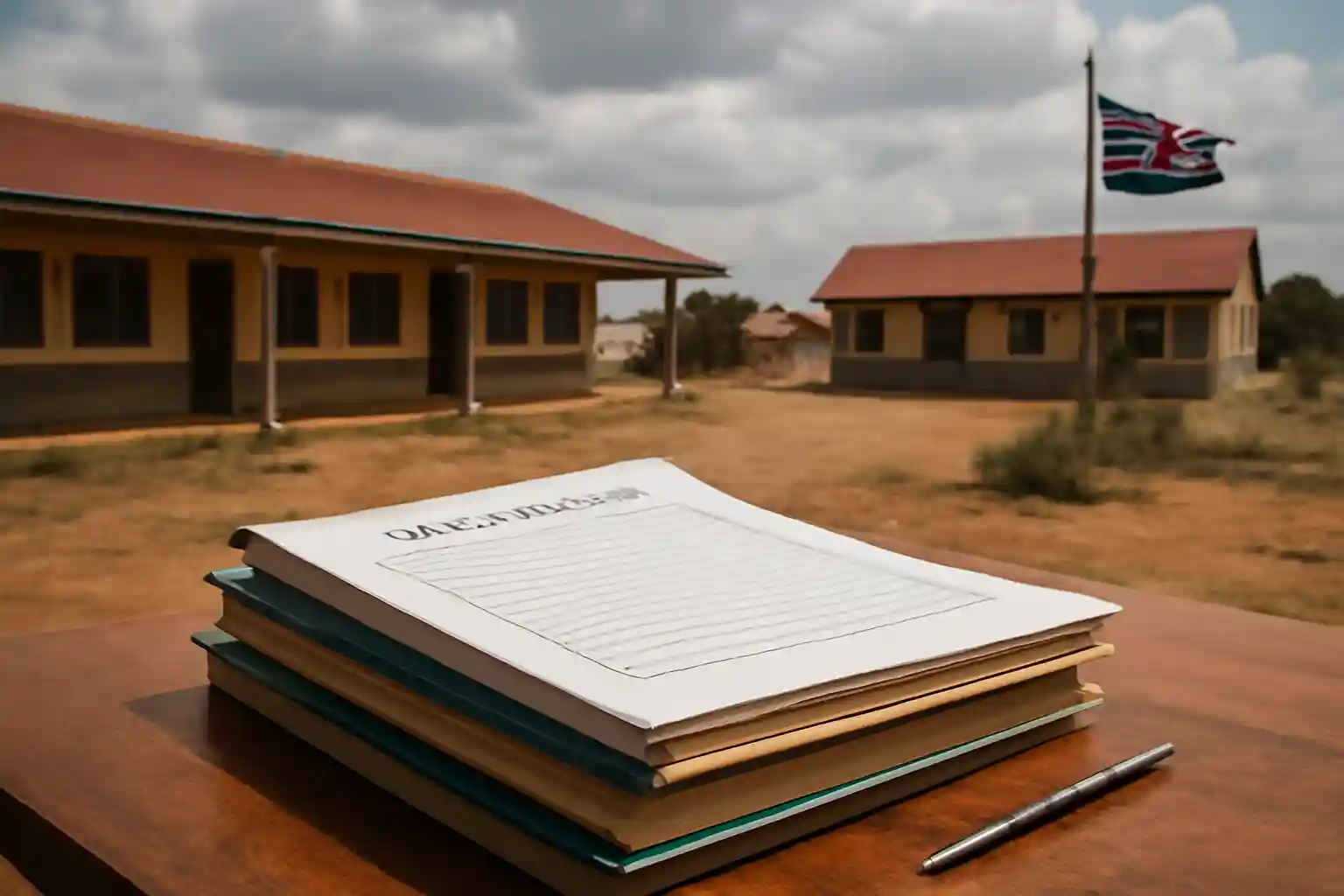
The Kenya Certificate of Secondary Education (KCSE 2026) moved into its main phase on Monday 2 November as candidates began the compulsory, large-candidature papers. The Ministry of Education reports that 1,048,355 candidates are registered across 10,693 examination centres. The exams are being administered under strict rules and contingency plans after two centres in Moyale Sub-County were relocated because of insecurity near the Kenya–Ethiopia border.
Key Takeaways
- KCSE 2026 main written exams began on 2 November with English Paper 101/1 and Chemistry Paper 233/1.
- 1,048,355 candidates sit exams in 10,693 centres; average ~98 candidates per centre.
- Two Moyale centres were relocated due to clan clashes; contingency arrangements are active.
- Special sittings arranged for hospitalised and detained candidates; strict KNEC rules and penalties apply.
KCSE 2026 overview
Today’s shift into large-candidature papers marks the start of the core KCSE examinations that nearly every candidate must sit. Morning sessions began at 8:00 a.m. and afternoon sessions at 2:00 p.m. Large-print and Braille versions are available where needed. KNEC has emphasised that no extra time will be given beyond the time printed on the paper unless explicitly stated.
What happened today and why it matters
The morning paper was English Paper 101/1 (Functional Skills), a two-hour paper (2.5 hours for Braille and Hearing Impaired candidates). The afternoon session ran Chemistry Paper 233/1. Earlier exam days were used for smaller elective subjects: foreign languages, music and technical practicals. That phased approach allowed authorities to concentrate resources as the larger KCSE cohort began.
Timetable highlights for the coming weeks
- Next day: Mathematics Paper 1 (morning) and English Paper 2 (afternoon).
- Chemistry Paper 2 and General Science Paper 1 are scheduled soon after, followed by English Paper 3.
- Kiswahili papers and subject practicals (Chemistry, Biology, Physics) run through November, with the exam cycle closing with the Physics practical.
Students and supervisors should follow the official timetable and arrive at centres 15 minutes before each paper.
Relocation and contingency measures
The Ministry confirmed that two centres in Moyale Sub-County, Marsabit County, were moved earlier in the day because of insecurity caused by clan clashes near the border. Names and new locations were not disclosed, but the action demonstrates that contingency procedures are in place. Authorities emphasise that candidates in volatile areas will be moved or protected so they can sit papers safely.
Special arrangements for vulnerable candidates
Examinations will be administered to candidates who cannot attend regular centres. The ministry reported arrangements for seven hospitalised candidates and five candidates in correctional facilities. These small numbers reflect the principle that illness or detention should not deny a candidate the chance to sit national exams.
Rules, conduct and penalties
Strict regulations govern exam conduct. Candidates must:
- Be available for searching before entering the exam room and be seated 15 minutes before the start time.
- Use only black or blue ink for answers; pencils are allowed for diagrams.
- Not bring mobile phones or electronic devices; possession risks result cancellation.
- Use only permitted calculators (non-programmable and without covers) where allowed.
Under the KNEC Act, an irregularity can lead to subject cancellation and a “Y” overall. Centre-wide malpractice can lead to full cancellation. Adults who leak exam content face severe penalties, including fines and prison terms. The ministry urges the public to report suspected malpractice via the KNEC toll-free lines: 0800 721 410 and 0800 724 900.
How schools and students can prepare now
Students should focus on stamina, time management and careful reading of each question. Supervisors and school staff must ensure secure delivery of papers and adherence to invigilation rules: one supervisor per 200 candidates and no invigilator handling more than 20 candidates.
Teachers and candidates can use structured revision materials to reinforce weak areas. For targeted practice and past papers, consider KCSE revision resources and topical exams such as KCSE topical revision exams and the free KCSE revision exams. Grade 10 students preparing for senior secondary exams can also find sample papers at Grade 10 exams resources.
Coordination and the road ahead
Delivering secure national exams involves coordination among teachers, parents, security agencies and transport providers. With over a million candidates, the weeks ahead will test preparation and composure. The council’s advice is simple: read each question carefully, avoid spending too long on any single question, and leave time to review answers.
KCSE 2026 now enters a critical three-week period that will shape many students’ futures. Candidates are reminded to follow rules, arrive on time and report any concerns through official channels.