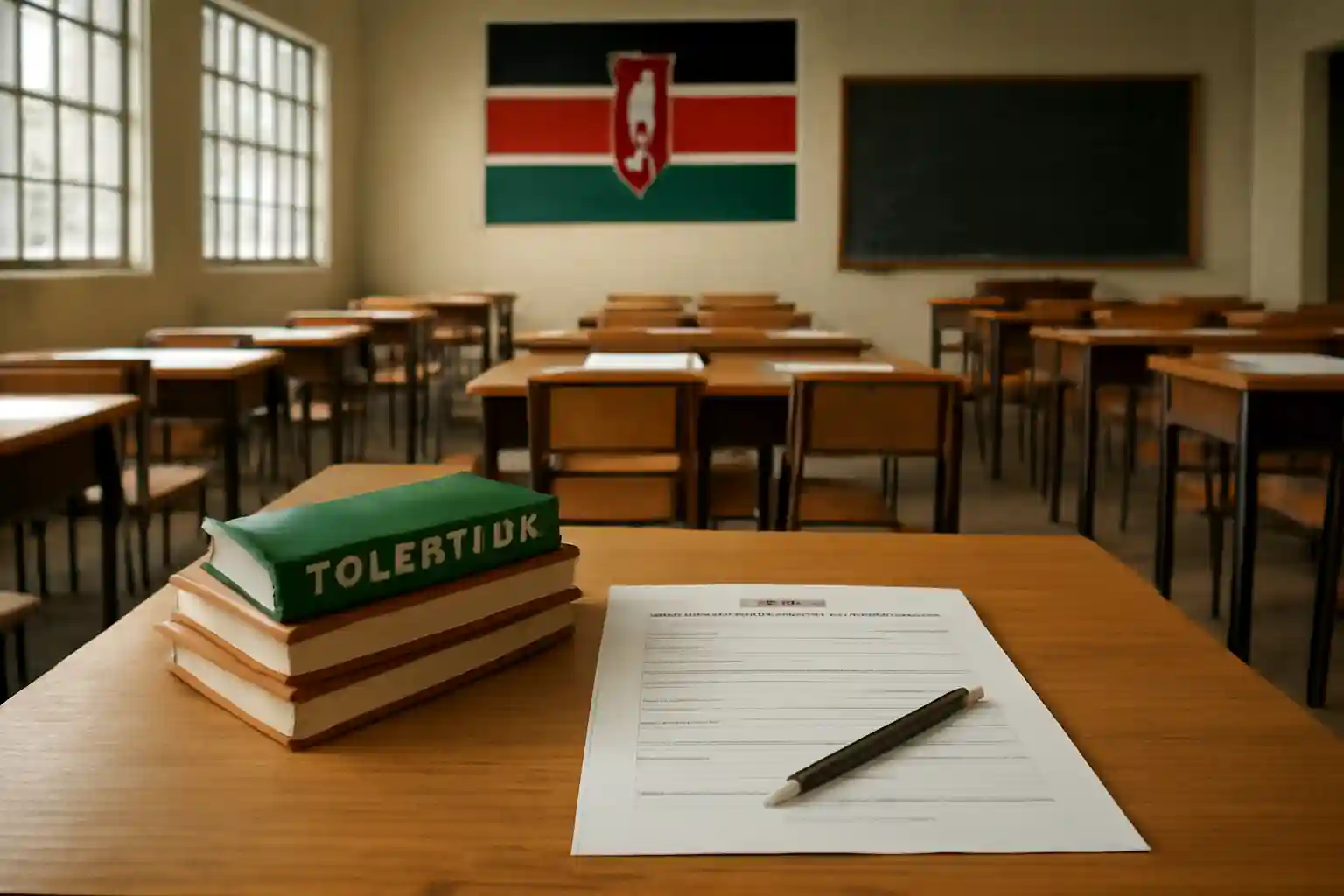
The first national sitting of the DTE PP&P KNEC summative assessment took place on 27 October 2026, marking the debut of the merged Diploma in Teacher Education, Pre-Primary and Primary. Candidates across Teacher Training Colleges sat two three-hour sessions that day, testing numeracy, assessment, classroom management, ICT and research skills that reflect the integrated competency-based approach to early years and primary teaching.
Key Takeaways
- The inaugural KNEC summative assessment for the DTE PP&P was held on 27 October 2026 after a rehearsal on 26 October.
- Exam format: two three-hour sittings — Mathematics in the morning and Educational Assessment, Management, ICT and Research Skills in the afternoon.
- The DTE PP&P merges the former DECTE and DPTE pathways into one three-year full-time qualification.
- Graduates gain dual employment mobility: they may apply for county early childhood posts or national primary posts through the TSC.
- Stakeholders will watch results and college readiness closely to judge how the merged curriculum performs under national assessment.
DTE PP&P KNEC summative assessment — first national sitting
On the first day candidates spent most of the day in exam halls. The morning paper was a three-hour Mathematics assessment. After a break, candidates returned for a second three-hour paper covering Educational Assessment, Management, ICT and Research Skills, finishing around 4:00 pm. KNEC organized a rehearsal the day before to confirm logistics — seating, timing and materials handling — because this was the first time the council ran the assessment for the new programme.
Why this assessment matters
The summative assessment is the first major checkpoint for a national policy that merged the Diploma in Early Childhood Teacher Education (DECTE) with the Diploma in Primary Teacher Education (DPTE). The change was announced on 19 January 2026 via a circular (Ref. QAS/ECDE/7/1B/2/193) directing all Teacher Training Colleges to offer the new Diploma in Teacher Education, Pre-Primary and Primary on a full-time basis and halting admissions and approvals for the old DECTE and UDECTE pathways.
This assessment will be used to evaluate whether the unified training produces teachers who can teach across the pre-primary to upper primary continuum and whether colleges have adjusted teaching staff and resources to deliver both early years and primary methods effectively.
Programme design, duration and entry requirements
The DTE PP&P is a three-year full-time diploma designed to prepare one teacher to work from PP1 and PP2 through Grades 1 to 6. The programme aligns with competency-based curriculum principles that treat learning as a continuum: children leaving PP2 carry skills and gaps into Grade 1, so one integrated teacher preparation pathway aims to reduce fragmentation in learner support.
Admission requires a minimum KCSE mean grade of C (plain), a standard intended to ensure consistent entry quality across colleges offering the programme.
Employment prospects and mobility
A major practical benefit of the new qualification is increased employment flexibility. Early childhood education posts are handled by county governments, while primary teaching posts are managed nationally through the Teachers Service Commission (TSC). Graduates of the DTE PP&P can therefore seek jobs with county education services or apply through the TSC for national primary positions, widening access to vacancies compared with the previous separate qualifications.
What colleges and stakeholders should monitor next
Results from this pioneer cohort will be examined closely by college principals, policy makers and prospective students. Key questions include:
- Do colleges have enough lecturers and practical facilities to teach both early years and primary methods with equal strength?
- Does the summative assessment capture practical classroom skills and not only theory?
- How will results guide refinements to curriculum delivery, resourcing and assessment design?
Answers will emerge as results are released and as colleges adapt. Institutions that once specialised in either early childhood or primary training must now show they can deliver a combined programme on a full-time basis.
Resources for candidates and trainers
Candidates and tutors preparing for teaching across the pre-primary and primary range will find useful study materials and past papers. Consult diploma past papers to familiarise yourself with typical assessment formats. For curriculum planning and lesson design that support the continuum between PP and Grade 1–6, see the CBC curriculum designs and practical classroom resources such as the PP2 schemes of work and CBC lesson plans.
Next steps for candidates
Focus on balanced preparation: strengthen numeracy, assessment literacy, classroom management and ICT skills. Participate fully in college practical sessions and seek feedback from supervisors on classroom practice. The pioneer cohort’s performance will shape expectations and improvements for future intakes, so thorough preparation matters for individuals and for the credibility of the new programme.